Drainage performance depends on correct installation as much as product quality. Even high-quality uPVC underground drainage systems will underperform if they aren’t installed correctly, supported properly in the trench, or assembled with care.
The system only performs as intended when pipework, ground conditions, and installation methods are all working together. If one element is off, issues tend to appear later as movement, restricted flow, or ongoing maintenance requirements.
This guide breaks down the most common installation issues seen on site, what typically causes them, and the correct methods to prevent them.
TL;DR (Key Points)
- Most underground drainage problems come from installation rather than pipe quality or material failure
- Incorrect gradients or poor alignment can slow flow, create standing water, and lead to blockages over time
- Poor trench preparation, narrow excavation, or weak bedding can reduce support and lead to settlement or movement
- Inadequate side support or uneven backfilling can allow pipes to shift during or after installation
- Mixing incompatible uPVC drainage components can introduce weak points and create fitting or alignment issues
- Poor jointing or assembly practices can result in leaks, infiltration, or joints failing under load
- Ground conditions, trench stability, and existing services should always be assessed before installation begins
- Testing before final backfilling helps identify issues while the system is still accessible and easy to correct
1. Incorrect Pipe Gradients and Alignment
Correct falls and alignment are essential for consistent drainage performance. Even minor deviations can create long-term flow issues if not corrected early.
Typical Causes Include:
- Inconsistent setting out along the trench leads to uneven falls, which causes slow drainage or standing water in isolated sections
- Lack of continuous level checking allows small errors to build up across multiple joints, creating dips or high points that are only noticed after backfilling
- Movement during early backfill stages can alter the designed gradient before the pipe is fully locked in by surrounding material
- Incorrect gradient selection in foul drainage can affect flow velocity, increasing the risk of solids separating or accumulating in sections
- Poor alignment at joints creates minor offsets that add up over distance, restricting flow and reducing system efficiency
How To Avoid It:
Set levels carefully before installing uPVC Underground Drainage Pipes, using string lines, laser levels, or boning rods to establish a consistent fall along the run. Don’t rely on eye alone, especially over longer distances.
Check alignment and levels continuously as you install each section, rather than relying on end-point checks.
Ensure joints are not used to force correction of line or level, as this introduces stress into the system.
Re-check levels after initial backfilling to make sure nothing has shifted, particularly on longer runs or in softer ground.
2. Trench Preparation, Bedding and Side Support
The trench forms the foundation of the system. If it is poorly prepared, even correctly installed pipework can fail due to lack of support or settlement.
Common Issues Include:
- Trenches that are too narrow can prevent proper compaction around the pipe, meaning side support cannot be correctly formed and voids remain alongside the pipe
- Over-excavation followed by backfilling with loose spoil leads to long-term settlement as material consolidates unevenly under load
- Using poor or oversized bedding material such as stones or debris can point-load the pipe and reduce its structural strength
-
 Water sitting in trenches during installation weakens bedding material and reduces its ability to properly support the pipe
 - Soft trench bases cause the pipe to sit unevenly, creating stress points and inconsistent gradients along the run
- Poorly worked side fill leaves voids in the haunch area, reducing lateral support and allowing movement after backfilling
How To Avoid It:
Ensure trench width allows full access for placing and compacting bedding and side fill properly.
Prepare a uniform trench base and remove any soft, unstable, or waterlogged material before installation begins.
Avoid reusing loose excavated spoil as structural backfill; use appropriate granular bedding material instead.
Install pipe onto properly prepared bedding so it is fully supported along its entire length.
Work side fill into the haunches in controlled layers to eliminate voids and fully stabilise the pipe.
3. Backfilling, Compaction and Load Application
Once the pipe is installed, the way it is covered and loaded determines whether it retains correct alignment and support.
Common Problems Include:
- Heavy plant or material placed too early over shallow cover can shift the pipe even if initial installation was correct
- Large uncontrolled backfill loads can distort alignment or create uneven pressure zones across the pipe
- Uneven compaction across trench width leads to settlement appearing later at ground level
- Poor sequencing of backfill allows one side of the trench to load before the other, creating lateral movement or stress
- Early loading before sufficient cover is achieved exposes the pipe to movement or deformation risk
How To Avoid It:
Place backfill in controlled, shallow layers rather than bulk filling the trench.

Ensure sufficient initial cover is achieved before allowing machinery or heavy compaction over the pipe.
Compact evenly across the full trench width to avoid differential loading.
Build up cover gradually so the pipe becomes fully protected before higher compaction levels are applied.
Avoid placing heavy loads directly above shallow cover sections.
4. Mixing Incompatible Components
While different products can be used within the same installation, problems can occur if compatibility, fit, and application are not properly considered.
Common Problems Include:
- Using components with different connection types or tolerances can prevent joints from seating correctly
- Forcing fittings together where dimensions don’t match can introduce stress into the system
- Variations in material or stiffness can affect how loads are transferred along the run
- Using general-purpose fittings where a specific solution is required can reduce reliability
How To Avoid It:
Use compatible components throughout the system where possible to maintain
consistent performance and alignment. Where transitions are required, use purpose-designed fittings such as flexible Couplings to ensure a secure and reliable connection between different materials or sizes.

Select fittings based on the function they need to perform rather than forcing standard components to fit. Changes in direction should be formed using appropriate Bends, and branch connections should be made using correctly sized Junctions to maintain flow and avoid unnecessary stress on the system.
Avoid mixing components that do not match in terms of connection type, tolerance, or intended application, as this can lead to poor jointing, misalignment, or long-term movement once the system is backfilled.
5. Jointing and Assembly Quality
Joints are one of the most sensitive parts of any drainage installation.
Common Issues Include:
- Dirt or debris inside sockets prevents proper sealing and leads to leaks under flow
- Poorly seated seals allow infiltration or exfiltration over time
- Incomplete insertion leaves joints partially engaged and prone to movement
- Misalignment places continuous stress on joints, reducing lifespan
- Inconsistent lubrication causes uneven seating and poor connection quality
How To Avoid It:
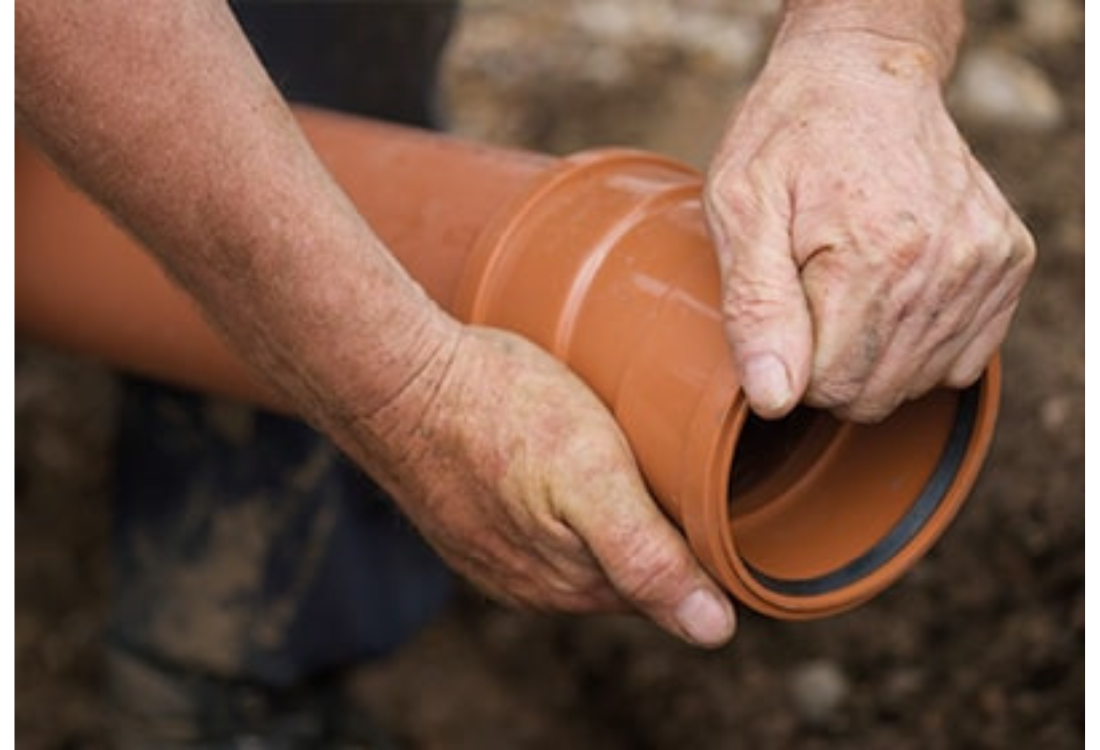
Clean all pipe ends and sockets thoroughly before assembly.
Check seals are correctly positioned and undamaged.
Ensure full insertion of pipes into sockets without forcing misalignment correction.
Use appropriate lubrication where required to ensure smooth, even joint seating.
Verify each joint before moving on to backfilling.
6. Access Planning and Maintainability
Access is essential for long-term maintenance, inspection, and clearing of blockages.
Common Oversights Include:
- Long runs, direction changes, and poorly planned layouts without sufficient or well-positioned access points make inspection, maintenance, and clearing significantly more difficult once the system is in service
How To Avoid It:
Install Inspection Chambers at key changes in direction, junctions, and along longer runs to ensure the system remains accessible for maintenance.

Position them where they can be easily reached once the job is complete,
avoiding locations that may be covered by landscaping, driveways, or future structures. Poor placement can make routine maintenance unnecessarily difficult.
Spacing should be considered across the full run rather than added as an afterthought, ensuring there are enough access points to inspect and clear the system if needed.
7. Ground Conditions and Existing Services
Site conditions and buried infrastructure must be assessed before installation begins, as they directly affect both safety and performance.
Key Factors Include:
- Trench collapse in unstable or loose ground conditions
- Water ingress weakening bedding and affecting installation stability
- Uneven settlement due to variable soil conditions across the run
- Damage to existing services such as power, water, or fibre during excavation
- Delays or rework caused by striking unknown services
How To Avoid It:
Assess ground conditions before excavation and adjust trenching methods accordingly.
Locate and clearly mark all existing underground services before digging.
Adapt bedding and support methods where ground conditions vary along the run.
Avoid installing in unsuitable or unstable ground without corrective measures.
FAQs
Q. Do uPVC underground drainage pipes need to be concreted in?
A. No. In most domestic and light commercial installations, uPVC underground drainage pipes are installed using granular bedding and surround. Concrete is only used in specific engineered or high-load applications.
Q. How deep should underground drainage pipes be installed?
A. There is no single fixed depth. Installation depth depends on site conditions and expected loading. The key requirement is ensuring sufficient cover above the pipe to protect it from surface loads and ground disturbance.
Q. Can uPVC underground drainage be installed in clay or unstable soil?
A. Yes, but additional care is needed with bedding and support. Poor ground conditions may require improved trench preparation to prevent movement over time.
Q. What is the lifespan of uPVC underground drainage systems?
A. When installed correctly, uPVC underground drainage systems are designed to last for decades with minimal maintenance, provided ground conditions and installation standards are suitable.
Q. Do I need inspection chambers on every underground drainage run?
A. No. They are typically installed at changes in direction, junctions, and at intervals on longer runs to allow access for maintenance and clearing.
Need Help Choosing the Right System?
If you’re planning a project and want to avoid installation issues from the start, choosing the correct components is essential.

Browse our full range of Underground Drainage Systems to build a complete and reliable setup from the ground up.
If you need help, give us a call on 01752 936152 or email us at sales@drainagesuppliesdirect.co.uk.